Introduction
Garden clearance and landscaping projects can produce surprising amounts of waste. From overgrown shrubs and tree branches to soil, turf and broken paving, removing everything can take considerable time and effort.
While skip hire is a popular option, it is not always the most practical solution. Grab hire offers an alternative, using a vehicle-mounted hydraulic arm to collect and load suitable waste quickly. Understanding when this service is most useful can help you save time, reduce manual labour and keep your garden project moving.
What Is Grab Hire?
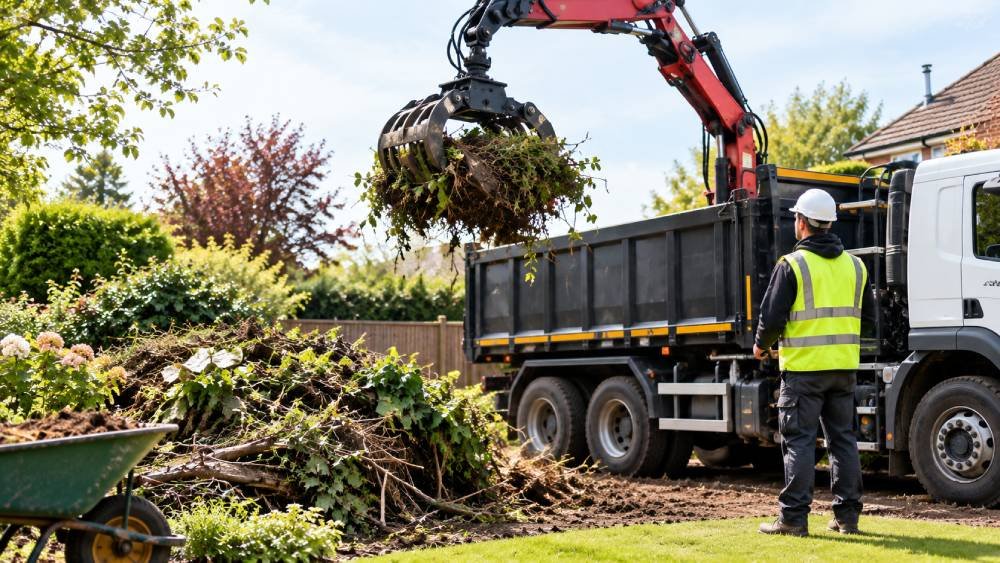
Grab hire involves hiring a lorry fitted with a hydraulic grab arm. The operator uses the arm to lift and load waste into the vehicle, which then transports it away for appropriate disposal or recovery.
Unlike a traditional skip, a grab lorry can often collect waste directly from an accessible pile. This makes it particularly useful when there is limited space for a container or when large quantities of material need removing.
For homeowners and landscapers planning grab hire Slough services, checking vehicle access and the type of waste accepted beforehand can help ensure a smooth collection.
1. When Clearing Large Gardens
Overgrown gardens can generate substantial volumes of green waste. Removing branches, hedges, shrubs and unwanted vegetation by hand can take hours, especially across larger properties.
Grab hire can speed up the process by collecting suitable waste in fewer loading operations. It is particularly useful after major garden clearance, tree work or the removal of dense vegetation.
However, confirm whether the provider accepts mixed green waste, as separate materials may require different handling.
2. When Removing Soil and Turf
Landscaping often involves digging out lawns, levelling uneven ground or preparing flower beds. These jobs can leave large piles of soil, turf and other excavated materials.
A grab lorry can remove suitable loose material without requiring workers to fill and empty numerous wheelbarrows. This can reduce manual handling and help prepare the site for the next stage.
Tell the provider what you are removing. Clean soil, mixed soil and rubble may have different disposal requirements and prices.
3. When Space Is Limited
A skip needs a suitable area for placement and loading. Not every driveway or garden has enough room, particularly in built-up neighbourhoods.
Grab hire may be a better option when waste can be placed somewhere accessible to the lorry’s hydraulic arm. The vehicle may be able to collect material without a skip occupying the property for several days.
Nevertheless, grab lorries need sufficient road access and working clearance. Check the vehicle’s reach and positioning requirements before booking.
4. When Removing Construction and Landscaping Waste
Garden redesigns can involve breaking up patios, removing old walls or replacing driveways. These activities produce waste such as concrete, bricks, paving slabs and rubble.
Grab hire can be efficient for collecting large quantities of suitable inert waste. It can also reduce the need for repeated trips to a waste facility.
Ask about weight limits, material restrictions and whether the quotation includes collection and disposal. Heavy materials can affect the total price.
5. When You Need Faster Site Clearance
Time matters when landscapers, builders or other contractors are working to a schedule. Delayed waste removal can prevent machinery from accessing the site or slow down further work.
A pre-arranged grab collection can clear accumulated material and make room for the next phase. To avoid delays, provide accurate details about the waste volume, collection location and access conditions.
Grab Hire or Skip Hire: Which Is Better?
Grab hire is often suitable for large, accessible piles that need quick removal. Skip hire may be more convenient when waste is produced gradually over several days or when workers need a container on site.
Compare the total cost, including loading, transport, disposal and any access-related charges, before deciding.
Conclusion
Grab hire can make garden clearance and landscaping more efficient, particularly when dealing with bulky waste, excavated soil or large quantities of rubble. It offers a practical alternative to manual loading and traditional skip hire.
Assess your waste type, project size and site access before booking. Choosing the right collection method can save time, improve site organisation and help your landscaping project progress smoothly.