A well-laid driveway transforms the front of a home, improves kerb appeal and stands up to daily use for years. Choosing the right block pavers is the foundation of that success. This guide walks UK homeowners through the key decisions so the finished surface looks good, performs well and represents sound value.
Paving Materials
When choosing block pavers in Warminster, homeowners should consider appearance, durability and budget. Concrete block pavers remain the most popular choice for British driveways. They are manufactured to consistent sizes, offer a wide colour range and deliver reliable strength at a sensible price. Clay pavers bring a richer, more traditional appearance and develop an attractive patina over time, though they usually cost more. Natural stone options such as granite or sandstone create a premium look but require careful selection for freeze-thaw resistance and can be significantly more expensive. For most residential driveways, high-quality concrete blocks strike the best balance between performance and budget.
Styles and Patterns
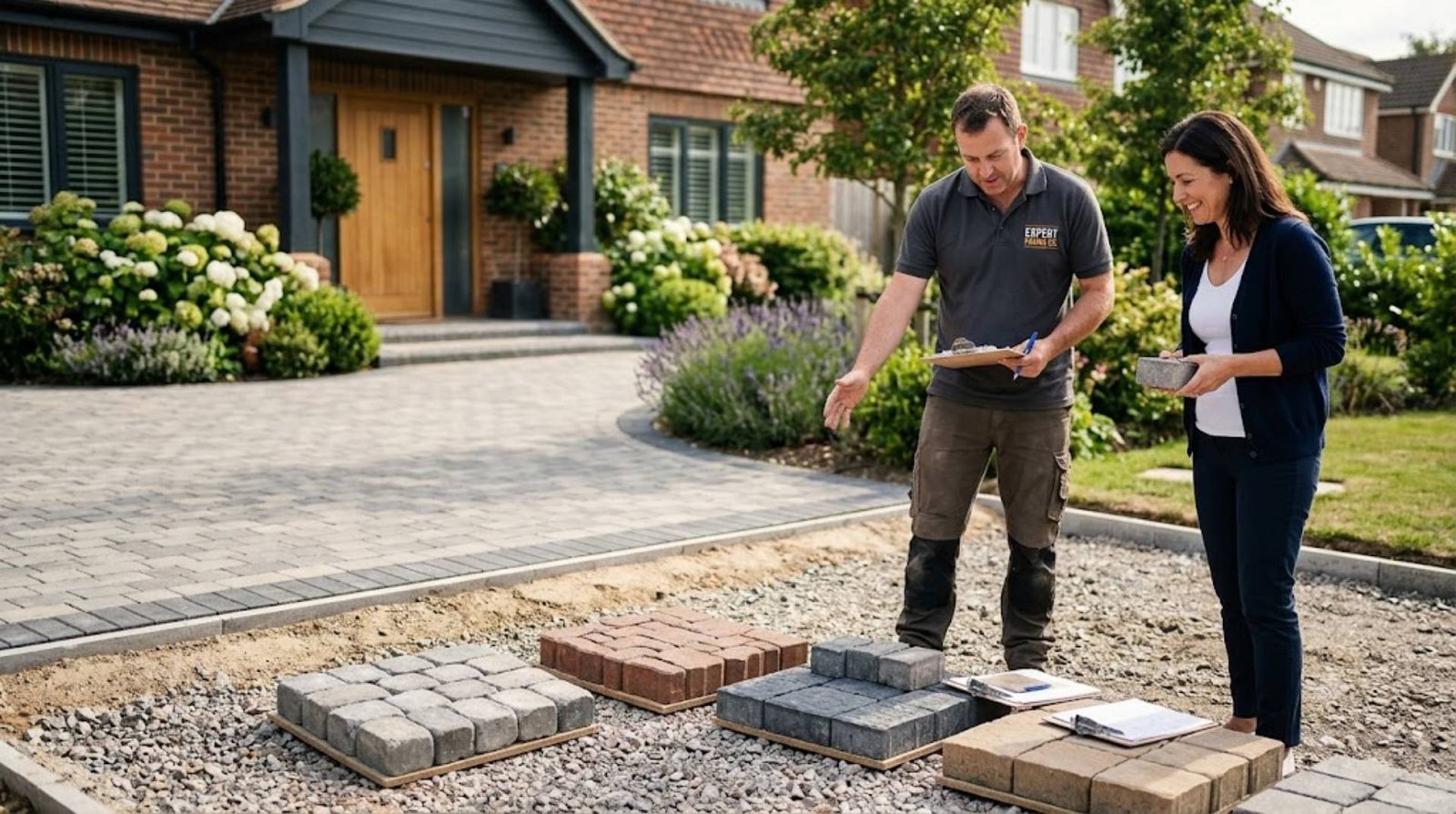
The pattern you choose affects both appearance and structural strength. Herringbone is widely regarded as the strongest layout for vehicle areas because the interlocking angles resist shifting under load. Basket-weave and stretcher-bond patterns work well for lighter-use areas or where a more formal look is preferred. Colour mixes and border details can add visual interest without compromising durability. Always view sample panels in natural light, as colours can appear quite different outdoors compared with showroom lighting.
Durability Considerations
Look for blocks that meet relevant British Standards for compressive strength and frost resistance. Thicker blocks (typically 60 mm or 80 mm) are recommended for driveways that will carry cars regularly. Edge restraint is equally important; without a solid concrete or pinned kerb, even the best blocks can spread over time. UV-stable pigments help colours stay true, especially in sunnier south-facing locations.
Driveway Preparation and Drainage
Proper preparation determines how long the surface will last. The existing ground must be excavated to a suitable depth, usually 200–250 mm depending on soil conditions. A well-compacted sub-base of MOT Type 1, followed by a sharp-sand or grit bedding layer, provides the necessary support. Drainage cannot be overlooked. UK winters bring heavy rain, so falls should direct water away from the house and towards permeable joints, channel drains or soakaways. Permeable block systems are increasingly popular because they reduce surface run-off and can help meet planning requirements in some areas.
Maintenance Requirements
Block paved driveways are relatively low-maintenance when installed correctly. Sweep regularly to prevent moss and debris build-up. Jointing sand should be topped up periodically, and a suitable joint stabiliser can reduce weed growth. Occasional pressure washing keeps the surface looking fresh, but avoid aggressive settings that might dislodge sand. Sealing is optional; some homeowners prefer the natural look, while others choose a breathable sealer for easier cleaning and colour enhancement.
Understanding Costs
Prices vary according to material, pattern complexity and site conditions. Concrete blocks typically start at a lower price point than clay or natural stone. Labour often accounts for a substantial share of the total, especially where groundworks or drainage improvements are needed. Request itemised quotations that separate materials, excavation, sub-base, laying and finishing so you can compare like with like. Investing in quality materials and a competent installer usually proves more economical than replacing a poorly constructed surface after a few years.
Choosing a Reliable Paving Professional
When searching for block pavers in Warminster, look for local contractors with proven experience on residential driveways. Check that they carry appropriate insurance, can provide recent references and are happy for you to visit previous jobs. Membership of recognised trade associations or accredited schemes offers additional reassurance. A good installer will visit the site, discuss ground conditions, explain drainage options and supply a clear written quotation. Avoid choosing solely on the lowest price; the cheapest quote can quickly become the most expensive if the work fails early.
Selecting the right blocks and a skilled team makes the difference between a driveway that looks tired after a couple of winters and one that continues to enhance the property for decades. Take time to compare samples, understand the full scope of preparation needed and choose an installer who treats the project with the same care you would.
Conclusion
A successful driveway begins with informed choices about materials, layout, construction and aftercare. By focusing on proven products, correct groundworks and competent installation, homeowners can achieve a durable, attractive surface that adds lasting value. Careful planning at the outset avoids costly problems later and delivers a driveway that performs reliably through British weather year after year.